Panchakarma Treatment in 2026: Benefits, Procedures, Duration and Cost
If you are considering Panchakarma treatment in Dubai, you may have questions about how it works, what procedures are involved, how long a programme takes and what it costs. Panchakarma is a traditional Ayurvedic approach that combines selected therapies with preparation and recovery care. The treatment plan can vary depending on a person’s health, needs and the practitioner’s assessment.
At AMMA Ayurvedic Clinic in Dubai, readers can explore Ayurvedic treatment options and discuss their individual needs with a qualified practitioner.
Unlike a single massage or wellness session, a Panchakarma programme may involve several stages and require time for preparation and follow-up. Understanding these details can help you decide whether to explore this approach and what to ask before booking. This guide explains the five classical procedures, their traditional uses, treatment duration, cost factors and important safety considerations.
What Is Panchakarma Treatment?
Panchakarma is a traditional Ayurvedic system of therapeutic procedures. The name comes from two Sanskrit words: pancha, meaning five, and karma, meaning actions or procedures. In classical Ayurveda, it refers to a group of treatments selected according to an individual’s needs.
The five procedures commonly discussed are Vamana, Virechana, Basti, Nasya and Raktamokshana. However, classical Ayurvedic traditions differ in how they classify the five procedures, particularly in relation to the different forms of Basti.
Panchakarma may also include preparatory therapies such as Abhyanga (oil massage) and Swedana (sudation or sweating therapy), followed by a planned recovery routine. These supportive therapies are not the same as the five main procedures.
According to the Central Ayurveda Research Institute, Panchakarma involves preparation, selected therapeutic procedures and a restorative regimen. The programme should be planned and supervised by an appropriately qualified practitioner.
What Are the Benefits of Panchakarma Treatment?
In traditional Ayurveda, Panchakarma is used as part of individualized therapeutic care. The expected benefits depend on the procedures selected, the person’s circumstances and the treatment plan.
It is important to distinguish traditional Ayurvedic explanations from outcomes established through modern clinical research. Evidence for many Panchakarma applications remains limited, and results from one treatment or study cannot automatically be applied to everyone.
1. Supports Relaxation and Self-Care
Some programmes include massage, rest and other calming therapies. These activities may provide an opportunity to slow down and focus on personal well-being. Individual experiences vary, and relaxation alone does not establish that a medical condition has been treated.
2. Encourages Attention to Diet and Daily Habits
An Ayurvedic practitioner may provide dietary and lifestyle guidance before or after selected procedures. Recommendations should take account of nutritional requirements, existing health conditions and prescribed medicines. Restrictive diets or prolonged fasting should not be undertaken without appropriate professional guidance.
3. Offers a Structured Treatment Plan
Panchakarma is generally approached as a process rather than a single appointment. Preparation, the main procedure and follow-up care may all form part of the programme. This structure can help people understand what is expected of them throughout treatment.
4. Allows Individualized Ayurvedic Care
Practitioners may select different procedures according to traditional Ayurvedic assessment and the individual’s health history. A personalized plan should also consider potential risks, contraindications and whether medical assessment is needed.
5. Forms Part of a Broader Wellness Approach
Some people explore Panchakarma alongside other lifestyle practices. However, claims that it removes all toxins, reverses ageing or cures chronic illnesses are not established by strong clinical evidence. Panchakarma should not replace necessary medical treatment.
What Are the Five Panchakarma Procedures?
The five procedures have different methods and requirements. Some are invasive or can cause significant side effects, so they must not be attempted at home.
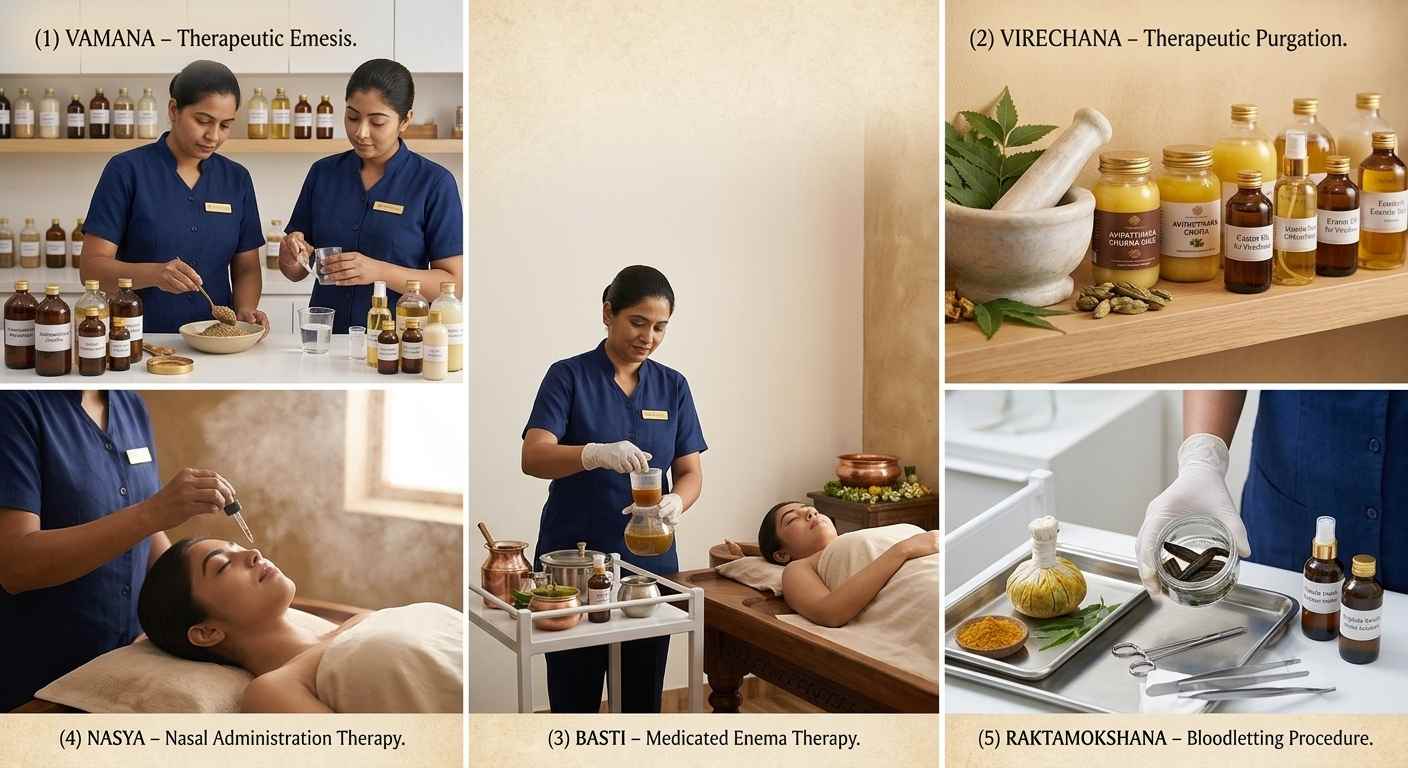
1. Vamana – Therapeutic Emesis
Vamana involves medically supervised, induced vomiting within traditional Ayurvedic practice. It requires careful patient selection and monitoring because vomiting can lead to dehydration, electrolyte disturbances and other complications.
2. Virechana – Therapeutic Purgation
Virechana involves therapeutic purgation using a prescribed approach. It may cause fluid and electrolyte loss, particularly if complications occur. A qualified practitioner must assess suitability and provide appropriate supervision and aftercare.
3. Basti – Medicated Enema Therapy
Basti involves administering prescribed medicinal preparations through the rectal route. Different forms are described in Ayurvedic practice. It is not a routine home treatment and may be unsuitable for people with certain bowel conditions or other health concerns.
4. Nasya – Nasal Administration Therapy
Nasya involves administering selected medicinal preparations through the nose according to an Ayurvedic treatment plan. The preparation, method and suitability should be determined by a qualified practitioner. It should not be confused with ordinary nasal cleansing.
5. Raktamokshana – Bloodletting Procedure
Raktamokshana is a traditional procedure involving bloodletting in selected circumstances. It carries risks such as bleeding and infection and is not a general wellness treatment. It requires appropriate professional expertise, infection-control measures and compliance with applicable regulations.
The five procedures are not suitable for everyone. The practitioner should explain why a particular procedure is being considered, what it involves, its possible risks and what alternatives are available.
How Does Panchakarma Treatment Work?
A traditional Panchakarma programme is commonly described in three stages. The exact sequence depends on the chosen procedures and the individual’s assessment.
1. Purvakarma – Preparation
Preparation may involve selected oil-based therapies, external applications, sudation or dietary instructions. Not everyone requires the same preparation, and some procedures require additional assessment before treatment begins.
2. Pradhanakarma – Main Procedures
This stage involves the main procedure or procedures selected for the individual. The practitioner should explain the planned treatment, monitor the person’s response where necessary and address any adverse symptoms promptly.
3. Paschatkarma – Recovery and Aftercare
Aftercare may include gradual dietary changes, rest, follow-up appointments and instructions about returning to normal activities. The recommendations depend on the procedure and the individual’s response.
How Long Does Panchakarma Treatment Take?
Panchakarma treatment duration varies according to the selected procedures, preparation requirements and recovery plan. It may take several days or longer, and some programmes extend over a number of weeks.
You may encounter advertised 7-day, 14-day or 21-day programmes. These are examples of package durations, not universal requirements. A longer programme is not automatically more suitable or more effective.
Before booking, ask the clinic how many treatment sessions are included, whether consultations and preparation are part of the package, how much time each visit requires and whether follow-up appointments are needed.
Your schedule should be based on the proposed treatment plan rather than a fixed duration chosen solely for convenience.
What Is the Cost of Panchakarma Treatment in Dubai in 2026?
There is no single standard price for Panchakarma treatment in Dubai. The total cost depends on the clinic, programme length, procedures included and level of professional supervision.
The following factors can affect the quotation:
- Consultation and assessment: Initial appointments and follow-up consultations may be charged separately.
- Treatment duration: Longer programmes may require additional sessions and practitioner time.
- Selected procedures: Different therapies involve different preparation, materials and supervision.
- Medicines and supplies: Ask whether prescribed preparations and other materials are included.
- Aftercare: Dietary guidance, recovery support and follow-up visits may affect the total price.
For an accurate estimate, contact the clinic directly and request an itemized quotation. Confirm the number of sessions, what is included, whether any additional fees apply and what happens if the treatment plan needs to change.
Do not assume that a price advertised for an Ayurvedic massage represents the cost of a full Panchakarma programme. They are different services.
Who Can Consider Panchakarma Treatment?
Panchakarma may be explored by adults interested in traditional Ayurvedic care, but suitability depends on individual health circumstances and the procedure being considered.
Before starting, the practitioner should review your medical history, current symptoms, prescribed medicines, allergies and treatment goals. You should be able to ask questions and understand the possible benefits, limitations and risks before giving consent.
Who Should Take Extra Precautions?
Pregnant or breastfeeding individuals, children, frail older adults and people with significant medical conditions may require additional assessment or may need to avoid certain procedures. Extra caution is particularly important with induced vomiting, purgation, enemas and bloodletting.
Ask a qualified healthcare professional before proceeding if you have a chronic condition, take regular medication or are recovering from an illness or operation. Do not stop prescribed medicines or delay necessary medical care to undertake Panchakarma.
Also ask about the qualifications of the person performing the treatment, hygiene practices, emergency procedures and the clinic’s arrangements for managing complications.
Why Choose AMMA Ayurvedic Clinic for Ayurvedic Treatment in Dubai?
Choosing an Ayurvedic clinic involves more than comparing treatment packages. You should understand who will assess you, what the proposed treatment involves and how your safety will be managed.
If you are considering AMMA Ayurvedic Clinic in Dubai, contact the clinic to confirm the following details before booking:
- Practitioner qualifications: Ask about the qualifications and relevant professional licensing of the practitioner who will assess and supervise your treatment.
- Initial assessment: Find out how your medical history, current concerns and treatment suitability will be evaluated.
- Treatment details: Request a clear explanation of the procedures being recommended and why they have been selected.
- Transparent pricing: Ask for a written quotation that lists consultations, sessions, medicines and aftercare.
- Follow-up support: Confirm what guidance will be provided after treatment and whom to contact if you experience unexpected symptoms.
You can visit the AMMA Ayurvedic Clinic website to explore its services and make an enquiry. Confirm directly whether the clinic currently offers a full Panchakarma treatment in dubai, which procedures are available and what professional supervision is provided.
Conclusion
Panchakarma is a traditional Ayurvedic approach involving selected procedures, preparation and aftercare. Understanding the five procedures, the time involved, the cost factors and the possible risks can help you make a more informed decision.
If you are considering Panchakarma treatment in Dubai, begin with a professional consultation. Ask about the proposed procedures, practitioner qualifications, safety precautions, expected duration and total cost. Do not choose a programme based on promises of a complete detox or guaranteed results.
For those exploring Ayurvedic care at AMMA Ayurvedic Clinic, the next step is to confirm the clinic’s available services and arrange an enquiry. A clear treatment plan, realistic expectations and appropriate professional guidance are more important than choosing a package based on its advertised duration alone.
Frequently Asked Questions About Panchakarma Treatment
Panchakarma is a traditional Ayurvedic system involving selected therapeutic procedures, preparation and recovery care. The treatment plan varies according to individual assessment and the procedures chosen.
The five commonly described procedures are Vamana, Virechana, Basti, Nasya and Raktamokshana. Some classical traditions classify the five differently, particularly regarding the forms of Basti.
The duration depends on the procedure and treatment plan. Some programmes last several days, while others extend over weeks. A practitioner should recommend an appropriate schedule following assessment.
No. Certain procedures can be unsuitable or require additional precautions depending on a person's health and medicines. Professional assessment is essential before treatment begins.
No. Ayurvedic massage, such as Abhyanga, is an external therapy. Panchakarma is a broader treatment system that may involve preparation, selected procedures and recovery care.
You can visit the to enquire about available Ayurvedic services. Confirm whether Panchakarma is offered, which procedures are available, practitioner qualifications and the total cost before booking.